



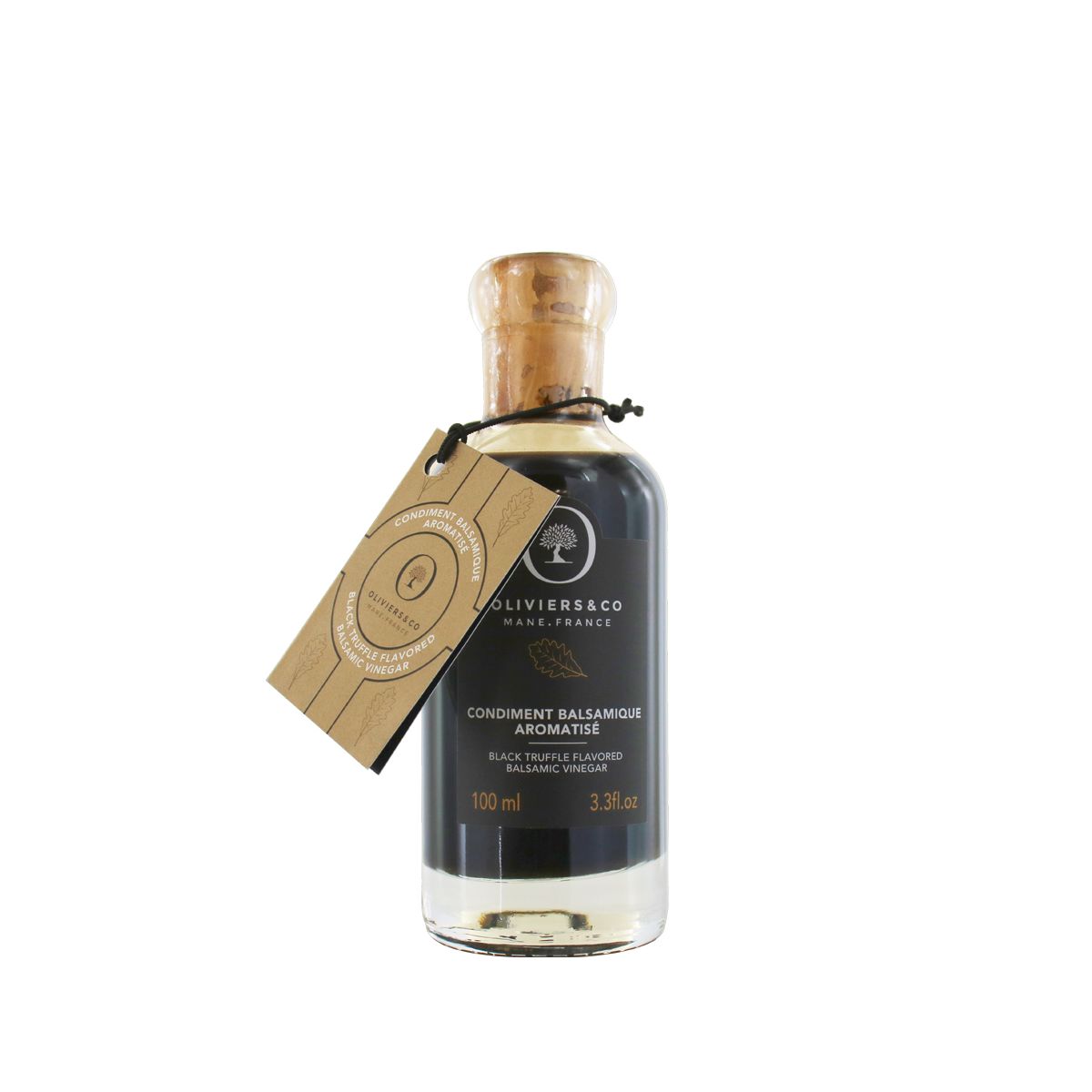
What is balsamic vinegar? How to choose the best one?

What is balsamic vinegar? How to choose the best one?
What is balsamic vinegar made of?
What does "Balsamic Vinegar of Modena" mean? Is balsamic vinegar the same as wine vinegar? How do you choose the best balsamic vinegar? How do you use it, how do you store it, and how long does it last?
We often get excellent questions about balsamic vinegar, and rightly so. Once you discover the benefits of a few drops of this magical nectar, you won't want to be without it in your kitchen. Here are the answers to help you choose the right balsamic vinegar and make the most of it in your cooking.

What is balsamic vinegar?
Balsamic vinegar is an indispensable part of Italian cuisine. It is used, for example, to season Parmesan cheese, in salads, pasta, and risotto. If you enjoy cooking Italian dishes, it is an essential ingredient for you.
For centuries, balsamic vinegar has been produced in the province of Modena, in the heart of Emilia-Romagna. It is in this region of northern Italy that the best Trebbiano, Lambrusco, and Ancellotta grape varieties, perfectly ripe, are harvested. After pressing the juice, these grapes are further cooked slowly to produce a must, which is the basis of balsamic vinegar.
There are essentially two recognized types of balsamic vinegar from Modena:
1) Balsamico di Modena IGP is made from grape must (minimum 20%) and wine vinegar (minimum 10%). The higher the proportion of must compared to wine vinegar, the better the quality of the vinegar.
2) Aceto Balsamico Tradizionale di Modena DOP, produced exclusively from grape must.
IGP – Indicazione Geografica Protetta (in Danish PGB – Protected Geographical Indication) indicates that a food product comes from a defined geographical area where it is produced, processed, or prepared.
DOP – Denominazione di Origine Protetta (in Danish PBO – Protected Designation of Origin) indicates that a food product bears a protected designation of origin and is subject to strict requirements regarding its origin, production method, and quality.
Both types of balsamic vinegar must therefore contain the essential grape must – at least 20% and 100% respectively. The answer to whether wine vinegar and balsamic vinegar are the same is therefore no. Without grape must, there is no balsamic vinegar.

Both types of balsamic vinegar are fermented and aged in barrels made of noble wood such as oak, chestnut, cherry, ash, and mulberry, for a period ranging from several months to several decades. Each type of wood imparts specific characteristics to the balsamic vinegar during fermentation, aging, and maturation. The slower the fermentation, the more intensely the aromas develop.
Aceto Balsamico Tradizionale di Modena DOP must age for at least 12 years, and each year traditional balsamic vinegar from Modena is transferred to increasingly smaller barrels.
Balsamic vinegar is characterized by its sweet and sour taste. The younger it is, the more liquid and acidic it is. The longer it ages, the more complex its aromas become, and its sweet taste intensifies. Over time, balsamic vinegar reduces, increasing its density and viscosity, giving it a syrupy consistency.
Over time, balsamic vinegar gradually transforms into a balm (from Latin/Greek: fragrant, pleasant, soothing), hence its Italian name "balsamico," which simply means balm.

Why is it important that your balsamic vinegar comes from Modena?
Traditional balsamic vinegar is considered Italian gold. It is an authentic and refined product, the result of handed-down know-how and the cultivation of grapes from a very specific area of the Emilia-Romagna region. Since the 1980s, balsamic vinegar has been imitated, and today it exists in many different qualities.
It is recommended to choose balsamic vinegar with a Protected Designation of Origin (DOP) to avoid unintentionally buying a lower quality product – as there are many on the market. For example, some industrial manufacturers may sell wine vinegar without any grape must, colored with caramel and sweetened to imitate the dark and aromatic notes of true wine. It goes without saying that the taste is different.
In 1993, the Consorzio Tutela Aceto Balsamico di Modena (Consortium for the Protection of Balsamic Vinegar of Modena) was founded to ensure compliance with production and quality standards. Since then, all official productions of traditional balsamic vinegar with a Protected Designation of Origin (DOP) are marked with a numbered neckband inscribed "Consorzio Aceto Balsamico di Modena," which guarantees their control. The bottle also bears the official yellow and red label with the DOP designation.

Aceto Balsamico Tradizionale di Modena is bottled exclusively in 100 ml bottles with a characteristic teardrop shape. Its price increases with age and can reach up to 7,500 DKK per liter. On the other hand, only a few drops are enough to transform a ripe tomato, delicious vanilla ice cream, or a piece of Parmesan into an unforgettable gastronomic experience!
The certification for the second recognized type of balsamic vinegar from Modena, Balsamico di Modena IGP, is identifiable by a small yellow and blue IGP mark, which guarantees the product's origin.
The production of this balsamic vinegar is also regulated, but with greater flexibility. Balsamic vinegar IGP from Modena must come from grapes grown and processed in the Modena region. Furthermore, as mentioned, it must contain a mixture of grape must (minimum 20%) and wine vinegar (minimum 10%). The higher the proportion of must, the better the quality of the vinegar.

How to choose the best balsamic vinegar?
Look for recognized certifications and designations of origin. Carefully read the ingredient list and check their order. If grape must is listed first, it is the main ingredient, and the balsamic vinegar will be sweeter, more syrupy, and of higher quality. Conversely, if wine vinegar is listed first, the acidity will be more pronounced, and the consistency more liquid.
Finally, always pay attention to additives, especially caramel, which colors the vinegar and artificially replaces the slow thickening in barrels, giving an artificial sweet taste.
At Oliviers & Co, our IGP balsamic vinegars from Modena contain 50% to 90% grape must; the rest is wine vinegar. They contain neither caramel nor colorants.

What kind of balsamic vinegar to choose?
It largely depends on what you want to use the balsamic vinegar for.
Aged balsamic vinegar (6 to 8 years) is never used directly in cooking, as heat destroys the most complex aromatic notes developed during barrel aging. It is always added exclusively as a finishing touch just before serving.
Young balsamic vinegar, on the other hand, is suitable for cooking, for example, for deglazing or as a final seasoning for soups, risottos, and sauces. It is more acidic, making it also great for fresh salads.
In our kitchen, we always have a young balsamic vinegar and a more mature one, so we can choose the one that best suits the dish we want to prepare. If you regularly cook good homemade meals, most people can easily have several types on hand without worrying about whether they will use them up.
One of the great advantages of balsamic vinegar is its very long shelf life, provided it is well-sealed and stored away from light, such as in a kitchen cupboard. Moreover, since only a small amount is used at a time, a couple of bottles of good quality balsamic vinegar will allow you to prepare many tasty dishes for a long time.

At Oliviers & Co, our range of balsamic vinegars spans from the finest young balsamic vinegars – our everyday balsamic vinegar, our top-quality "Argenté" balsamic vinegar and our organic top-quality "Argenté" balsamic vinegar – to our aged balsamic vinegars: golden balsamic vinegar, exclusive Balsamico Gusto Intenso, and the excellent Aceto Balsamico Tradizionale aged for 12 years.
Our selection also includes popular balsamic vinegar with figs, white balsamic vinegar, luxurious balsamic vinegar with truffles, and balsamic vinegar with wild Madagascar pepper.

How to use balsamic vinegar in cooking
1) As a finishing touch before serving
Add a magical touch of Italian flavor to your dishes just before serving – try it on everything from quality cheese to vegetables, meat, poultry, fish, and desserts.
For example, use your aged balsamic vinegar on burrata, grilled goat cheese with figs and nuts, shrimp with basil, caprese salad, braised Brussels sprouts, veal carpaccio, grilled vegetables, pizza, pan-fried sea bream fillet, scallops, oysters, a good piece of meat, crispy duck breast, root vegetables, panna cotta, vanilla ice cream, and fresh ripe fruits like pears and strawberries.

2) Balsamic dressing
Prepare the best Italian dressing with 4 tablespoons of high-quality Italian olive oil (for example, lemon oil or olive oil with herbal notes), 2 tablespoons of balsamic vinegar (for example, fig balsamic vinegar), and a pinch of flake salt and freshly ground black pepper.
Use balsamic dressing on all your salads, from the crispiest with delicate lettuce leaves to salads made of cabbage, lentils, apples, and root vegetables. Serve it also in a small bowl for dipping fresh bread.
3) How to prepare glazed vegetables
Give your seasonal vegetables an exceptional taste with a delicious balsamic glaze, either in a pan or in the oven. Stir them well in the pan or coat them with a mixture of high-quality olive oil (for example, La Classique or our classic Italian olive oil), young balsamic vinegar, sea salt, freshly ground pepper, and a little thyme to taste, before placing them in the oven.
You can use balsamic glaze, for example, on beetroot, mushrooms, red onions, carrots, pumpkins, bell peppers, parsnips, Jerusalem artichokes, potatoes, squashes, and cherry tomatoes.
4) How to deglaze a sauce
Use young balsamic vinegar to deglaze meat or vegetable sauces. Remove the roasted meat or vegetables from the pan, but keep the juices and stock. Add a generous amount of balsamic vinegar and stir well with a wooden spoon while heating. After a few seconds of simmering, the fragrant sauce is ready. You can also add a little red wine, cream, or broth. Pour the sauce over the roasted dishes and serve.
You can use this deglazing technique, for example, for sauces with duck breast, mushrooms, red onions and carrots, or with steak.
5) To perfect the tasting experience
You can also use young balsamic vinegar as a finishing touch for a warm dish. Just add a few drops to the dish when seasoning, just before serving.
For example, you can use balsamic vinegar to season pasta, risottos, and creamy soups.
See our selection of balsamic vinegars from Modena here.
